The Way Baseball and Softball Organizes Players Is Antiquated
Golf has handicaps. Gymnastics has levels. Karate has belts. Chess has ELO. Baseball and softball organize kids by the one number that has nothing to do with ability: when they were born.
This article was originally published on Bobby's Substack - you can subscribe for free to be alerted whenever he publishes something new!
Picture two brothers playing basketball in the driveway.
The older one is bigger and better. On paper it’s no contest, but he keeps the game close, lets his little brother hang around and get some shots off here and there.
The little brother is having fun playing… Then something shifts.
The older brother stops holding back. It stops being fun for the younger brother. Because the little brother has no chance. He’s too short, too slow and not skilled enough.
If the older brother isn’t careful, he’ll force his little brother into a choice so many kids are making about their sport participation: This isn’t worth it and I’m done.
Why Good Competition Matters
Sports are most fun when the competition is good. Good competition is where players grow the most, iron sharpening iron.
A blowout is boring. Nobody remembers a 20-0 game, whether they were on the winning or the losing one.
What makes a game come alive is being challenged. When two sides are matched well, every pitch carries weight and every mistake costs something.
That tension is the whole point. It’s the good kind of drama, the kind that comes from the game itself… and it’s exactly what youth baseball and softball have lost.
What we usually have instead is a completely different kind of drama. It grows out of the pressure to be good rather than out of real competition, and it’s draining the fun from both sports.
Other sports have figured out ways to alleviate this, and ensure that competitions are as competitive as possible:
Golf
Golf has a handicap system.
When you play golf, you aren’t really competing against the other person. You’re competing against the course.
Par is the standard. It’s the score the course asks of you, hole by hole.
The genius is the Handicap system. It looks at how you actually play, adjusts for how hard each course is through a Slope Rating and shifts par to your level of play.
A beginner and a pro can tee off together and have a real match. Each one plays against their own honest version of par and the better round wins.
It isn’t a perfect system, and people do try to cheat their handicaps. But even that only works because there’s a real standard sitting underneath to cheat.
Gymnastics: Respecting the Difficulty & Danger
Gymnastics has levels.
In the USA Gymnastics Development Program, a gymnast moves from level one to level ten by first showing they’ve mastered the skills at each stage.
The ladder does two things at once. It keeps kids safe, and it makes sure every gymnast has earned the right to try what comes next.
Karate
Karate has belts.
You test for it, and it’s an honest statement of what you can do. It also keeps a beginner off the mat against someone who could hurt them.
Chess
Chess has an ELO rating.
A player’s ELO rating moves only from results against other rated players. Beat someone well above you and it jumps. Beat someone below you and it barely moves.
Play enough games and your number settles onto your true level
Baseball and Softball Have an Age-Based Problem
Now let’s finally turn to baseball and softball. These sports have no standardization like this. Everything is organized by birth dates.
Kids develop physically at wildly different rates, and that has almost nothing to do with skill.
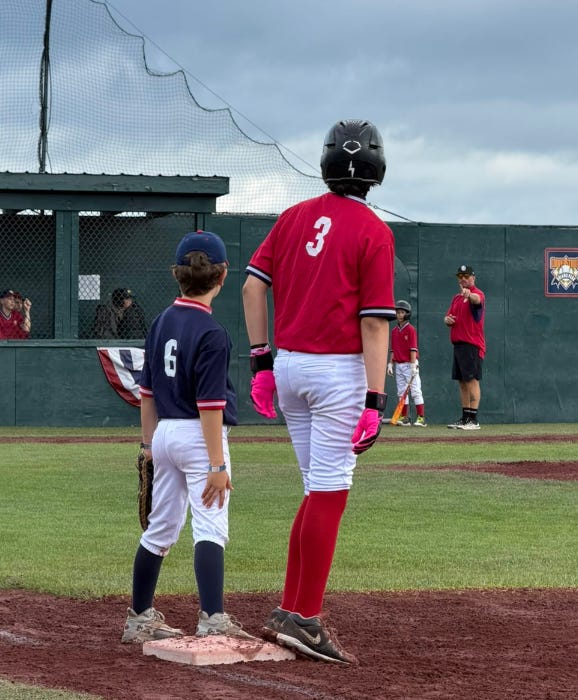
Two twelve-year-olds can stand side by side and look like a grown man and a small child (see the photo above, taken this year in Cooperstown Dreams Park).
Every sport we just visited would recognize this instantly. It’s exactly the kind of thing they built a standard to handle.
Baseball and softball did the opposite. Instead of understanding what our game actually demands, we organized everything around the one number that has nothing to do with ability: when a kid was born.
That’s the age-based problem and its effects run deeper than most people realize.
At the surface, it makes games boring. A bigger, older-bodied team beats an overmatched one twenty to nothing, and nobody on either side is really competing.
Get the organization right and you finally get the thing everyone wants, which is to let the kids play a game that actually matters.
The Data is There
The exciting part is that we absolutely can measure young players. We do it constantly.
Exit velocity, throwing velocity, sprint times, every number you can imagine. The trouble is that none of it is anchored to anything.
There’s no standard that turns those numbers into perspective, no honest picture of where a kid stands or where they’re headed.
A rising exit velo feels great, but on its own it’s just a number without a map. And a number without a map has almost no use.
The System Baseball Was Missing
Baseball and softball are time-based. Every play is a race against the real clock of the sport, the speed of play it actually requires.
It’s also what the Universal Rating System measures. The way golf measures you against par, the URS measures you against time.
It’s a single scale from zero to a thousand, with every player on it, no matter their age.
And like every standard that came before it, it hands the game back two things. Real competition, because players are matched by ability instead of birthday.
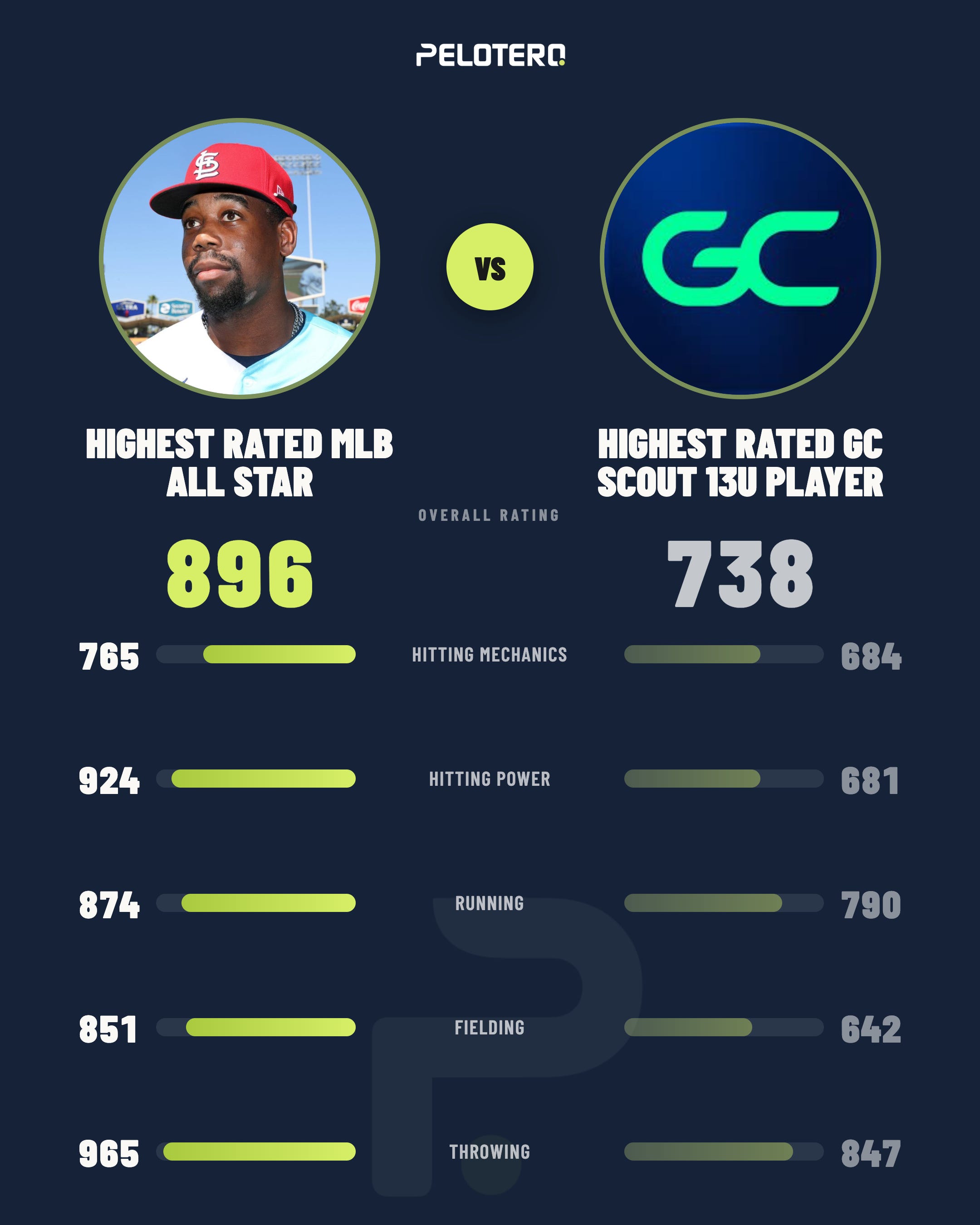
Pictured here is a comparison between the highest rated player at a test event we captured recently vs. Jordan Walker. Its pretty awesome to be able to compare these players on a shared scale - and precisely quantify the gap!
Get Started with Pelotero
There are three easy on-ramps, depending on where you sit in the game.
Teams can run tryouts on the URS, so roster spots are earned on an objective scale, and every kid leaves knowing how to get better instead of just hearing yes or no.
High school programs can evaluate honestly, set real expectations with families, and build a true development pipeline.
College programs can benchmark recruits against a standard that reflects readiness, instead of chasing showcase noise.
The URS is live and already running in programs today.
Sign up for a demo and we’ll walk you through the whole system.
Join the email list for updates as we roll out.
Every serious sport eventually understood its own demands and built a standard around them. Baseball and softball are finally getting theirs. Once you start seeing the game through time instead of age, it’s really hard to unsee.

Written by
Bobby Tewksbary
Bobby is a co-founder of Pelotero. After finishing his collegiate and professional player career, he owned a baseball training facility for over a decade. He has worked with thousands of players of all ages - including pitching to one of his clients in the MLB Home Run Derby.