5 Ways Our CEO Uses Pelotero With His Own Kids
I'm one of Pelotero's biggest super users. These are the 5 features I use the most with my own kids.
As the CEO of Pelotero, I'm constantly working on improving the Pelotero platform and bringing our vision for Player Intelligence to life. But I'm also a super user. A dad with 3 kids playing baseball/softball. I use the platform nearly every day to help them in their journeys. These are the 5 features I use the most as a parent, and the places I'd recommend going for anyone trying to get more out of the platform and help their kids achieve their dreams.
1. Start with the Overall Rating
Every player gets a rating on a 1,000-point scale. That number reflects the speed your player plays the game at, and it places them in the whole landscape of the sport rather than against the kids who happen to share their birth year. Every level of the game is played at a faster speed than the level below it. Pitchers throw harder, runners are faster, and fielders have less time to make plays.
Some rough markers:
- 300: typical Little League (ages 11–12)
- 600: varsity high school
- 800–900: pro-level speed
The rating reflects how a player plays, not how old they are. A 12-year-old who plays at major league speed rates like one. Knowing where your player stands tells you how to develop them from here.
2. Find the Strengths and Weaknesses
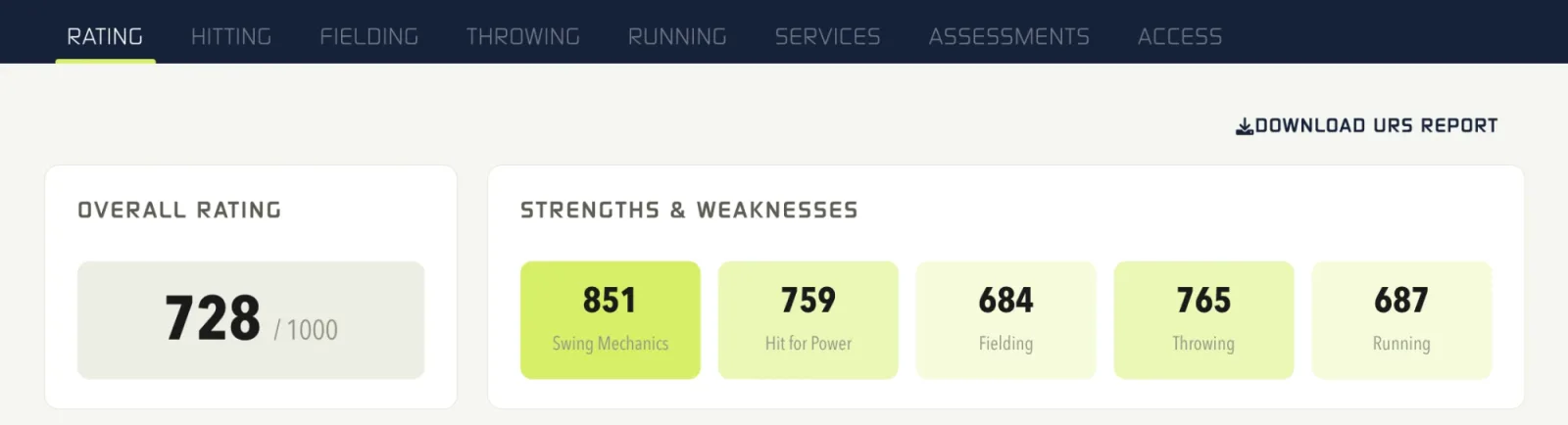
The overall score is built from five core tools: hit for power, hit for contact, throw, field, and run. These are the same tools the game has always been measured by.
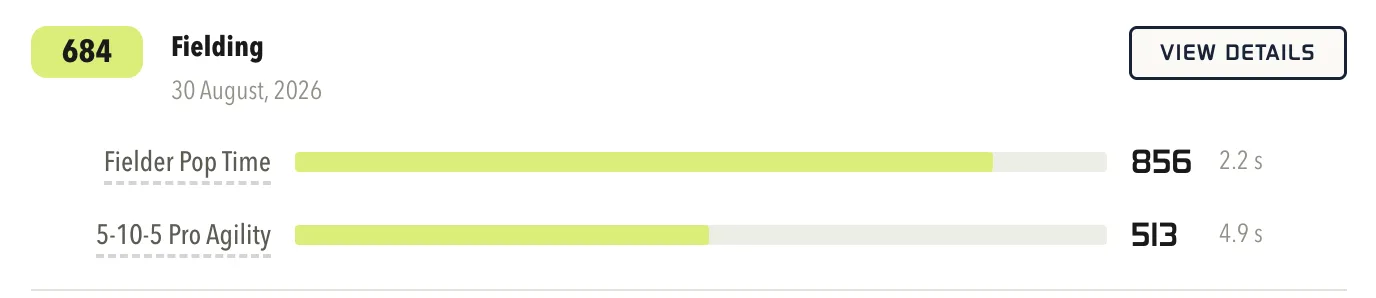
For my older son, the breakdown showed strong hitting and throwing velocity, with fielding and running as the areas to work on. Drilling into fielding showed even more detail: side-to-side agility is the specific skill to develop. That takes you from “work on defense” to a clear next step. This provides so much clarity to where he needs to be putting in work, and being able to show it to him has been very powerful.
3. Generate a Personalized Hitting Workout
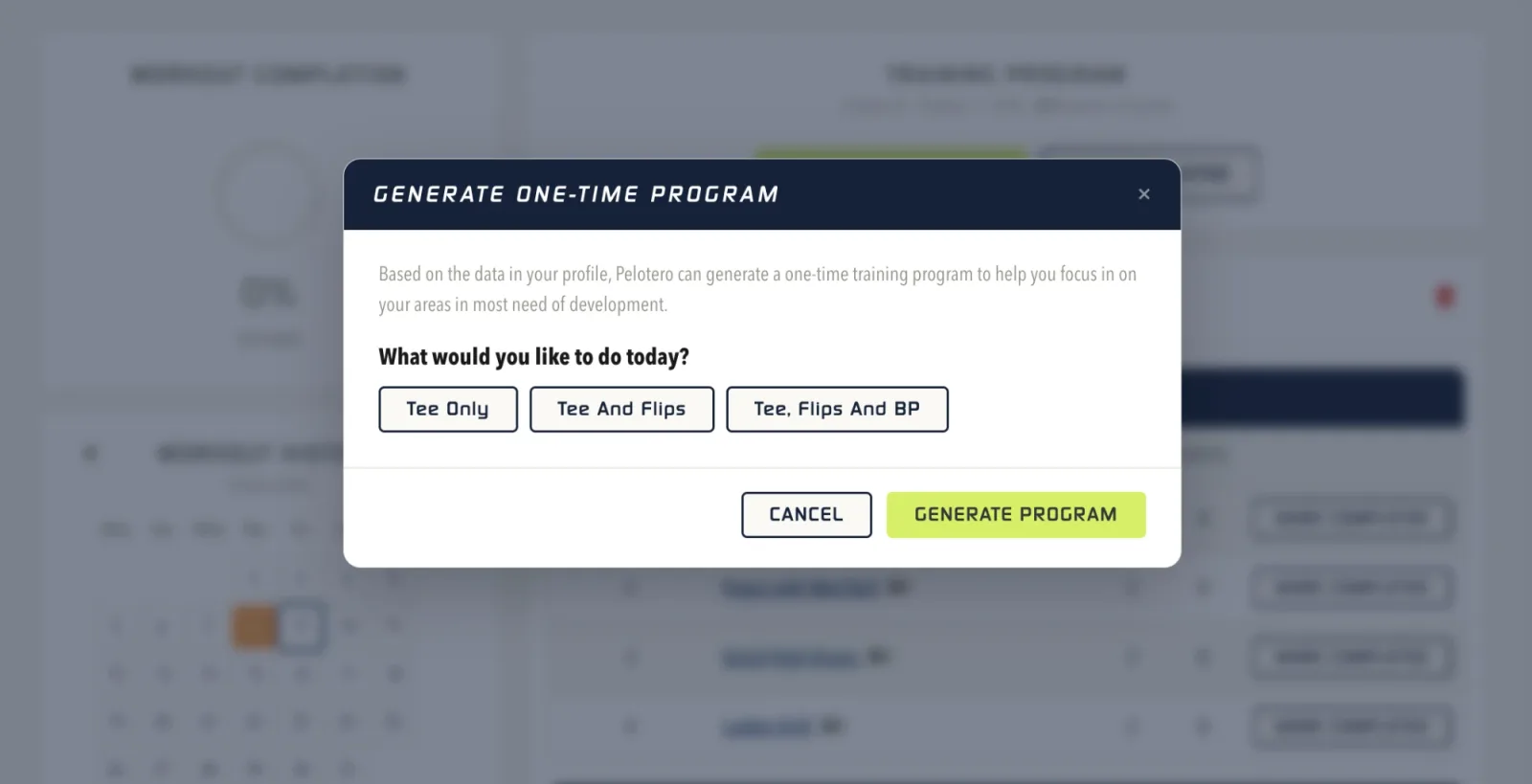
No drill is right for every player. Go to Hitting → Workouts, choose your equipment (tee, flips, BP), and hit Generate Workout.
Pelotero builds the session from whatever data your player has: their latest swing video, bat sensor data, and logged game performance. Each drill includes an objective, a demo video, sets, and reps. When your player finishes, mark it complete and the workout is tracked.
4. Dig Into the Mechanics
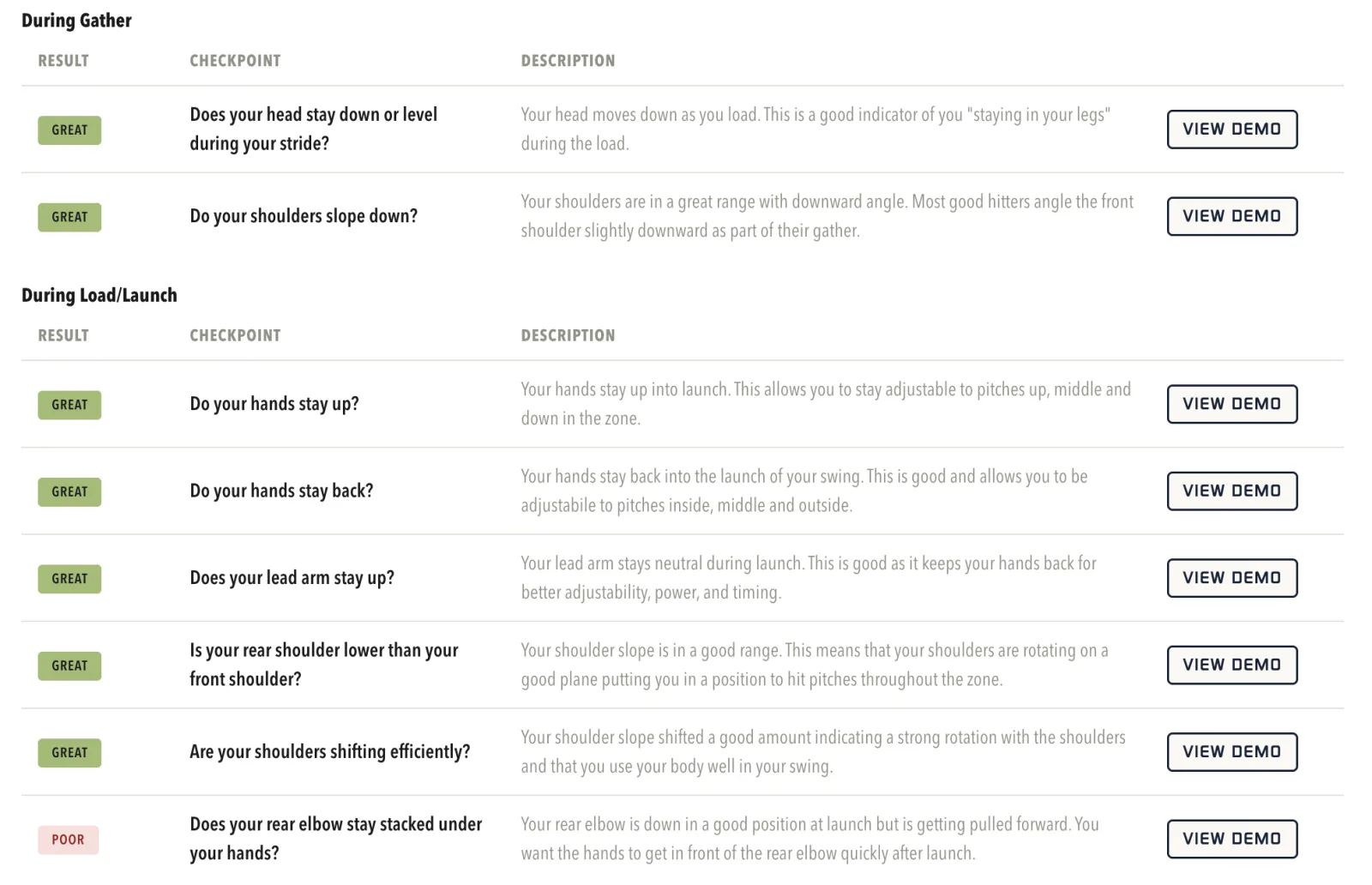
Every swing video becomes 150,000 data points. Those data points are checked against movement checkpoints taken from the greatest hitters of all time. Great hitters all swing differently, but they hit similar positions at key moments, such as keeping the head level during the gather and the hands up and back during the load.
If a checkpoint flags something you don't understand, like “rear elbow stacked under the hands,” tap the demo. You'll see what it looks like done well (Albert Pujols, for example) and done poorly.
5. Track Game Performance
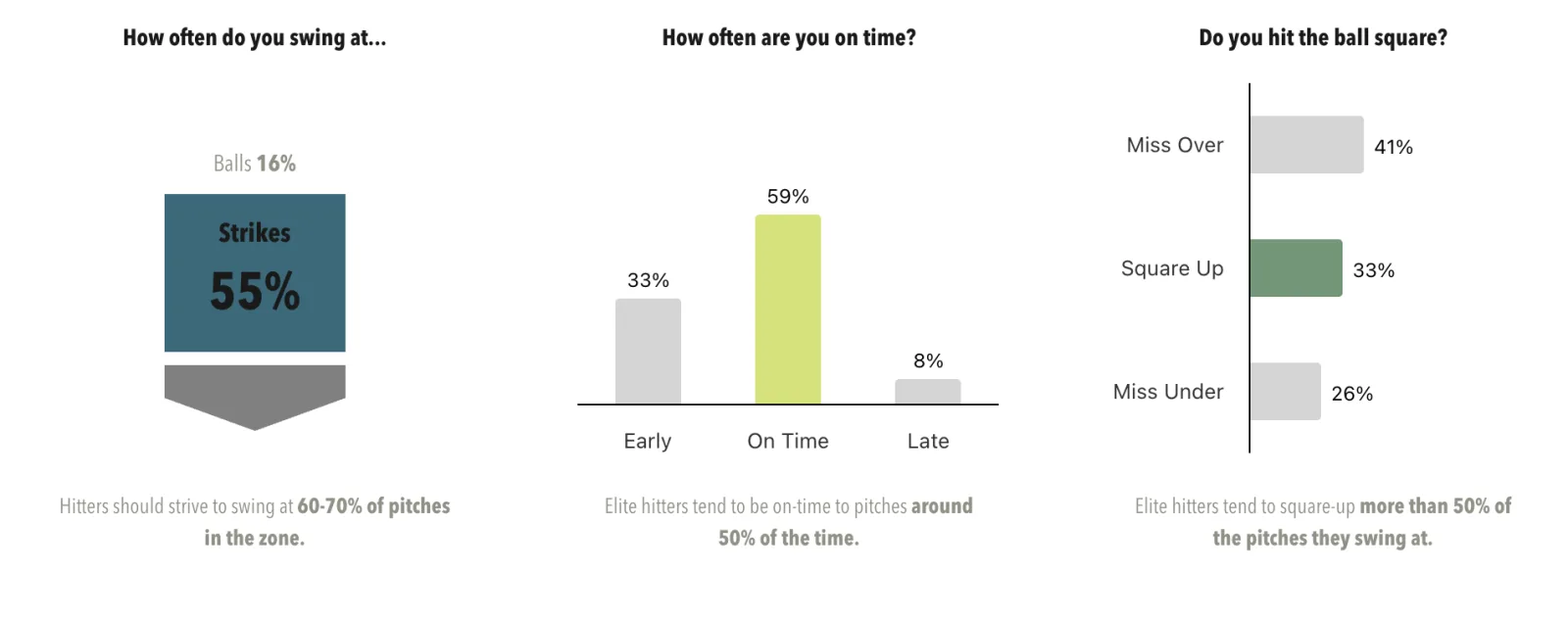
A great swing doesn't help much if the hitter is late, chasing, or making poor swing decisions. After each game, players log their at-bats pitch by pitch: early or late, missed over or under, fastball or curveball.
This builds a game log and a report card covering pitch recognition, swing decisions, timing, and contact quality. The Summary tab shows trends over 1, 3, or 12 months: Are they swinging at strikes? Squaring up the ball? Hitting line drives to the outfield?
This is how I find out whether the work in the garage is showing up in games, and if it isn't, why.
Where to Start
If your player is already on Pelotero, start with these five. And if you only have time for two, make them the Overall Rating and the Strengths & Weaknesses breakdown — between them they will tell you where to focus everything else.
If you are not on the platform yet, find a certified partner near you and they can get your player tested and scored.
And if you run a program and want to bring this to your athletes, talk to us about becoming a partner.

Written by
Bennett Fisher
Bennett is a serial entrepreneur who has founded, grown, and exited multiple venture-backed software and data analytics companies. He is the Chairman and CEO of Pelotero and a sports dad.